⚡️Energy Issues of 2019: Batteries, Blockchain & Microgrids

Moving into 2019, I will keep my eyes on the following issue:

  1. 🔋Batteries

Batteries are what will enable a sustainable energy future for us by tackling the ongoing problem of intermittency. Since solar and wind energy are intermittent 💡 (in a nutshell: if the sun stops shining because it’s cloudy, your solar panel stops producing electricity), they cannot be fully integrated into the baseload energy supply (powered by coal, gas, dams and other “reliable” sources). With batteries, you collect energy and store it for later use, the same way a water canister collects rainwater for later use.

Renewables – Storage = NOT A COMPLETE SOLUTION

 

s-l1600.jpg
Alessandro Volta, inventor of the battery


Right now: the lights that are currently on in your house or office have been generated by electricity produced moments ago. This is how our gird works, supply must meet demand, and the electricity that is not used is wasted.

Currently, the best most extensively used technology we have got on the market is the lithium-ion battery. As the cost of production of these batteries continues to fall, Elon Musk (founder of Tesla) believes that lithium-ion battery costs will fall to $100/KWh by 2020, dropping from a price of $1,000 only as recently as 2010. Bloomberg forecasts battery storage costs to drop below $50 by 2030. As of today, the cost is in the $200 range. As the cost continues to drop, renewable energy sources will become increasingly cost competitive with conventional energy production. Moreover, the growth of electric vehicles (EV) is driving lithium-ion battery production. EVs currently make up only roughly 1% of all vehicles, but that will change rapidly. According to a McKinsey & Company, the EV segment of the light-duty vehicle market could reach 20% by 2030, pushing the need to develop, better and cheaper batteries further.

But lithium-ion batteries are not the only game in town. There are many companies operating in the in the hot sector, a notable one being Ambri, the liquid metal battery startup which spun out of MIT materials research, which received funding from the likes of Bill Gates. Other battery companies, in the last two years have for different reasons gone under, such as the Aquion saltwater battery, Alevo filing for bankruptcy, LightSail burning through its cash for its compressed air storage; ViZn Energy is on its last legs looking for new funding for its flow battery.

The challenge for the non-lithium ion startups lays in demonstrating that their battery is significantly less expensive than the lithium-ion one and can perform over a long lifetime with limited degradation. This is an enormously technically challenging for now.

       2. Digitalization: Microgrids, Blockchain Technology, Data

Digitalization is an umbrella term thrown around by people in different sectors. In the context of energy, digitalization groups developing technologies such as microgrids*, Internet of Things (IoT), Big Data and Peer to Peer Technology, which improve efficiency and reduce costs.

This is a rapidly evolving area which is positioned to shift our energy system away from its centralized one-way street structure. It wants to shift our reliance on power stations and energy retailers, cutting out the middleman (and the associated cost) and moving us to more decentralized energy distribution.

⚡️Wholesale electricity distribution⚡️

Technology has the tendency to cut out the middleman , in this case, its the  energy retailers.  The end goal of blockchain and microgrids is to enable consumers to buy and trade directly from the grid, making traditional energy retailers unnecessary.  The marketplace would be made up of consumers who buy and sell to each other based on their respective energy needs. This would significantly more cost-effective and energy efficient, because connecting local use and production with local grids, can allow us to achieve local balance.

I already can hear the, “But this would be terribly inconvenient! Wouldn’t buying electricity when you need it be totally impractical-besides how am I even supposed to know how much to buy and when?!

Not at all. Not if we have an IoT (Internet of Things) device that automatically buys it for when you need it and how much you need. A device could be built into our homes, which would electricity when it’s cheapest at low demand, stores it in a battery, and then sells it back to the grid when energy is expensive at high demand.

In such a case blockchain technology would be the “middleman”.

Peer to Peer (P2P) Energy
Screenshot 2019-02-03 at 15.13.04
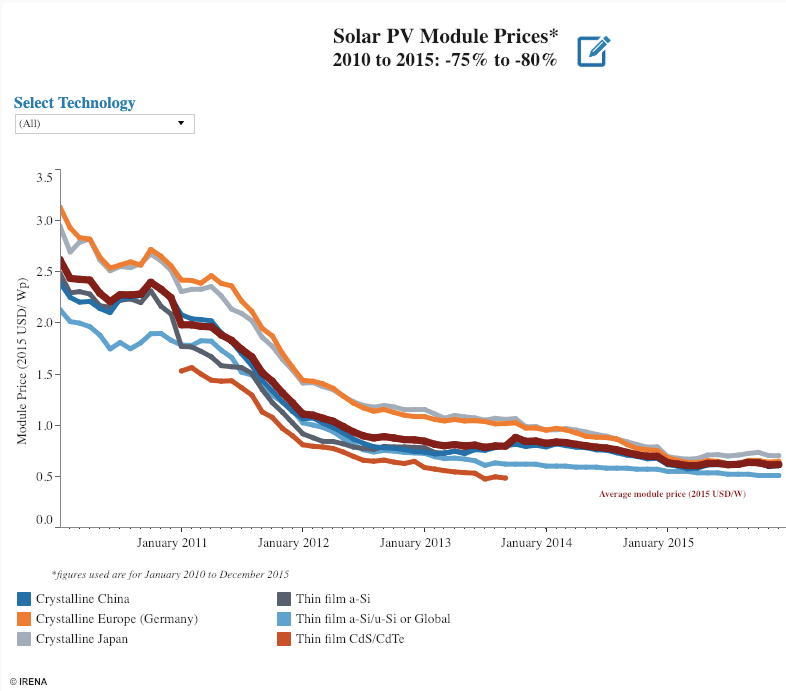
Solar PV Price Decline

With the boom in solar panel installations and with the exponential decline in prices,  we are not just energy consumers anymore — we are also the producers. If there are multiple people who produce energy in your neighbourhood, with their private solar panels, then you have a theoretical market place.

💡Case in point: I have solar panels on my roof to power my house.  If I have leftover energy from my solar panels, it is sold back to the grid. Due to inefficiencies and high distribution costs in this process, I am not making much money.

With P2P energy, I could sell this leftover energy to my neighbour using blockchain technology. Because the blockchain acts as the middleman in this transaction, I would make more money selling it to my neighbour than I would selling it back to the grid. This is because:

  • It’s cheaper for the neighbour to buy energy from me rather than our energy retailer. My neighbour can support renewables if they themselves do not have solar panels
  • It’s a more eco-friendly and more efficient use of electricity as less energy is lost along during the transmission from power station to the house, since the electricity would be traveling from my house to the neighbours house

On a small and local scale, there are pioneering companies that are already doing this in the US and in Australia.

Right now, microgrids are an additional grid which operates in parallel with the current grid. But P2P blockchain companies anticipate this to evolve into larger, more distributed, interconnected microgrids.

📈Data is King 

The energy sector collects enormous amounts of data on a continuous basis, thanks to the application of sensors, wireless transmission, network communication, and cloud technology. Data is being collected on both the supply and demand sides.

Data is only valuable if you know how to use it. The challenge rests in understanding how to harness this information in an efficient manner. But companies are starting to understand what this data can do for them and for the economy as a whole.

The only way to give this technology true value is to enable a statistical big data approach to it.

Intelligence comes from algorithms and self-learning, and from using data collected from sensors, databases, users, and meters.

As we gather and store information taken out of the energy system and smart meters, we can also compare that information to data that comes from weather patterns or consumer behavior.

By combining data streams, consumers and energy companies can be more efficient, make better use of their availability and aggregate capacity at the right time, in the right moment of the market, at the highest value, and create a better balance between demand and supply.

💡Case in Point: Devices in my house knows at what temperature I turn the heating on in my house, before I turn it on, and predict weather events, such as snowstorms which would trigger me to switch the heating on. The device would then, preemptively buy electricity at lower demand and store it in a battery for when the snowstorm arrives and the prices are higher.

Digitalization is already providing new opportunities for suppliers by optimizing their valuable assets, integrating renewable energies from different resources, and reducing operational costs; at the same time, it favors consumers by reducing the energy bills.

——

*If you are unfamiliar with microgrids and the implications that they will have (dare I say, are having) please check out my previous articles on the subject, The Energy Infrastructure That the U.S. Really Needs and🇺🇸Mr. Trump, Make The Grid Great Again!
🇩🇪Not all that Glitters is Green: German Renewables surpass coal in Electricity Generation⚡️

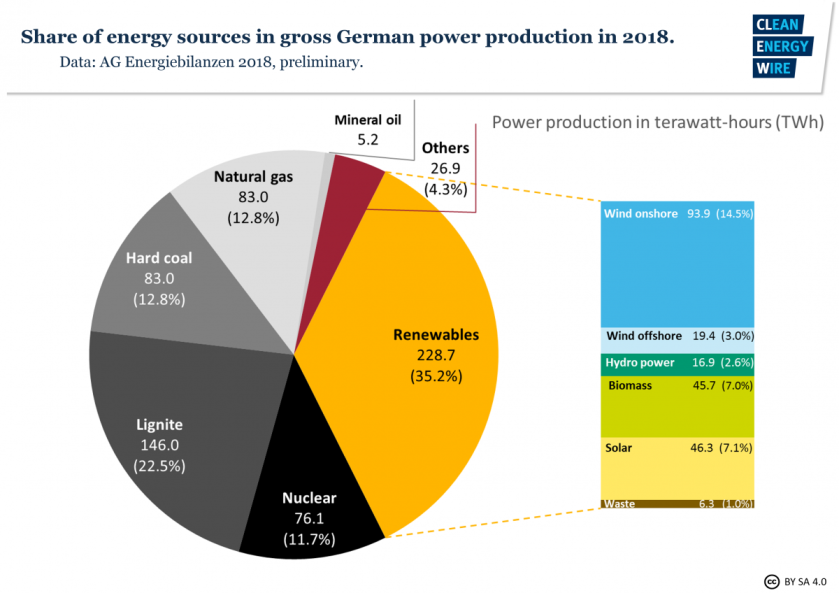
According to the Munich based Fraunhofer Institute, Germany’s renewables generated more electricity than coal in 2018 for the first time ever, with renewables providing 40% of the annual produced electricity and coal provided just 38%.

Note that, “renewables” is a general term that includes different sources—solar, wind, hydroelectric, and biomass (mostly wood pellets)—while coal is just a single fuel source meaning that renewables have not displaced fossil fuels, just coal.

The growth in renewables can be attributed, in part, to:

  • a prolonged hot sunny summer across Germany helping produce more renewable energy this year than last year, increasing solar output, by adding 3.2 gigawatts (GW) of solar to an existing 45.5 GW last year.

The remainder of Germany’s 2018 electricity production came from gas plants and nuclear plants.

While Germany did break ground, and on its own, this is great news, there are two sides to this story that make this achievement less impressive then it sounds.

✨All that glitters is not green✨

For starters, it stands to reason that if the solar energy grew, at least in part because of favourable weather rather then sustainable growth, then this growth is accidental rather then structural. So what could have been expected of those figures had the summer been rainy and cloudy?

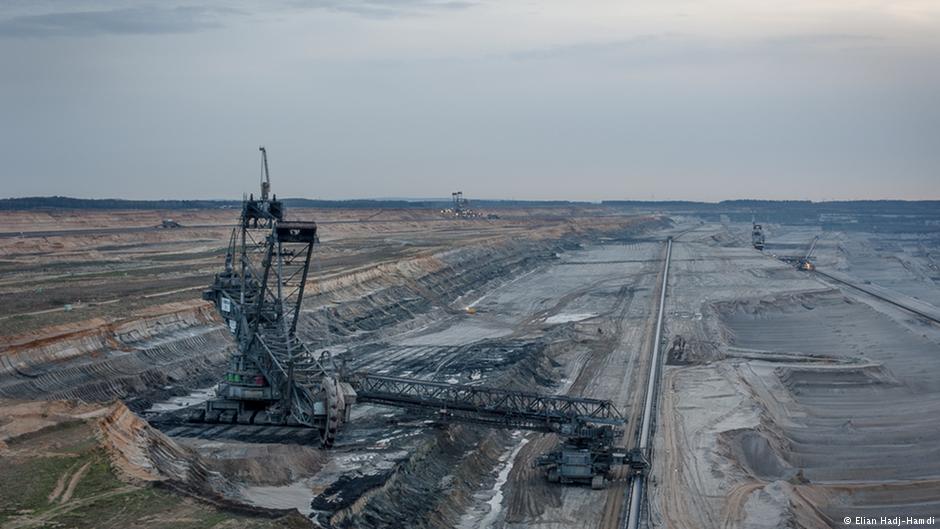
Secondly, coal and lignite* (dirtiest of all fossil fuels with relation to carbon dioxide emissions — but also the cheapest) still account for more than 1/3 of Germany’s electricity needs. Closing all of the country’s roughly 120 coal-fired power plants may take over 20 years, according to the government. Moreover, in 2011, following the Fukushima accident, the government decided to shut down 20% of the country’s nuclear reactors and close the rest by 2022. With nuclear on its way out, can we realistically 11.7% of Germany’s energy mix to replaced by renewables in a timely manner?

fig3_share_of_energy_sources_in_gross_german_power_production_2018.png


💸High Cost for Low Rewards?💸

Former Green environment minister Jürgen Trittin famously said that the burden placed on German households by the renewable energy surcharge would amount to “only around one euro per month, the price of a scoop of ice cream.” But the regular addition of renewables to the German power grid meant that the German taxpayer’s electricity bill was quickly inflated by the renewables surcharge, making Trittin’s well-intentioned comparison obsolete and quasi-comical.

Let me be clear: public dialogue about the energy transition’s price tag is propelled by a characteristic of Germany’s payment system green energies: consumers pay a renewables surcharge in their electricity bills. While this method may be more transparent than many alternatives based on direct state subsidies, it also elicits public debates about the costs. If the German electricity generation is what it is today, we have the German taxpayers to thank for it.

As of 2018,  the surcharge made up 23% of the power price paid by an average household. In other words, German electricity bills would be 23% cheaper if renewables did not exist altogether. However, new research led by Alberto Gandolfi from Goldman Sachs, shows that from now onwards the marginal capacity that is going to be added to the system is going to be deflationary, meaning that the surcharge accounts for old and less efficient renewable energy, and the new highly efficient renewable which will be added from now onwards will have to potential to decrease the surcharge.

Bearing in mind that the cost of solar PV has plummeted by about 80%, wind (both offshore and onshore) has dropped by about between 50% and 70% since 2010, therefore Gandolfi’s research seems likely to materialize in the near future.

Nevertheless, in spite of the higher energy bills, public opinion has remained supportive of the energy transition. Research conducted in 2017 by the Institute for Advanced Sustainability Studies in Potsdam found that 88% of those surveyed support the strategy to cut emissions.

Bear in mind that the energy transition’s costs are difficult to quantify. Estimates of the total amount of annual investment vary from 15 to 40 billion euros or 0.5% to 1.2% of Germany’s current GDP of around 3,200 billion euros.

Missed Targets

The German Bundestag has committed to reducing Germany’s greenhouse gas emissions by 40% by 2020, by at least 55% in 2030, by at least 70% in 2040 and by 80-95% in 2050 compared to 1990 levels. Germany’s ambitious targets also sought to reduce German dependence on imported energy, to shift electricity from fossil fuels to green sources, to make transportation and buildings more energy efficient.

Germany’s progress in achieving its targets if falling widely short of expectations. The government recently admitted that they will fall short of their 2020 target by 8%, achieving only 32% reduction of emissions since 1990 vs. the 40% target and will thus fail to meet its goals as set out in the 2015 Paris Agreement.

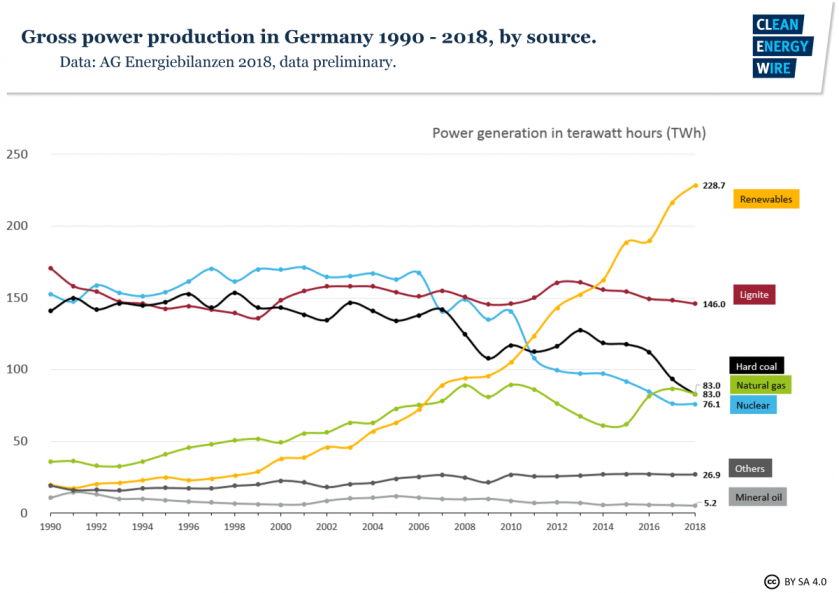
fig2a_gross_power_production_in_germany_1990_2018.png

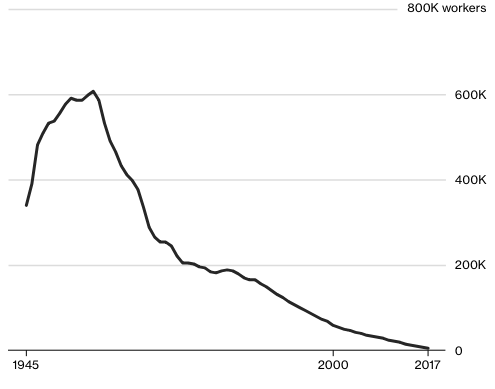
If we look above at the above electricity production for Germany, coal (meaning Hard coal and Lignite) plays an enormous role. While Hard coal consumption has dropped, lignite has not decreased significantly. The reason for this is that lignite coal is too cheap and reliable. The second reason is that touching lignite is a sensitive political issue, even in Germany, due to the roughly 22,500 people whose jobs depend on it. Although employment in the coal industry is on its way out (see above below), the jobs are located in economically fragile areas, where losses would be felt deeply.

German Coal Employment

Screen Shot 2019-01-05 at 12.29.36.png
source: Statistik der Kohlenwirtschaft e.V., chart from Bloomberg

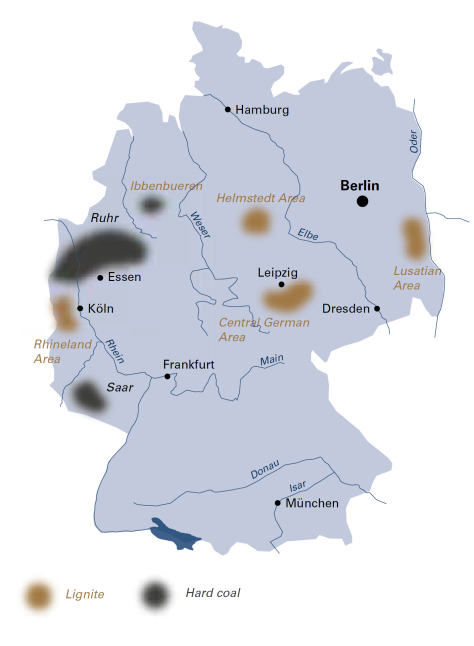
However, the relative cheapness of lignite is explained by the fact the price of carbon is not factored into its price. This means that is we were to see the real price of coal, with the price of pollution factored into it, it would not be cheap at all. In any case, the market favours “cheap coal” and this is why its use has barely decreased, despite falling profits from coal plants.

germany coal.jpg
source: Euracoal, 2015, Coal Deposits

Moreover, Germany’s target to put 1 million electric vehicles on the road is clearly going to be missed, since by the end of 2017 there were 131,000. The government’s strategy of aEUR 4000 subsidy per vehivle on green vehicles is all but wasted without a coherent and structured strategy to switch conventional vehicles with green vehicles.

The fact that Germany is set to miss its 2020 targets by 8% is terrible news. The OECD has called on Germany to take additional measures to make up for the loss, but nothing concrete has come out it., yet.

Therefore, although German renewables surpassing coal in electricity generation can be seen as a glimmer of hope in an otherwise grey backdrop, there are structural problems that stand in the way of achieving necessary reduction targets. And if Germany cannot achieve its own targets, then who can?

*Lignite, a.k.a brown coal, is a soft, brown, combustible, sedimentary rock formed from naturally compressed peat. It is considered the lowest rank of coal to its relatively low heat content and high moisture level, which means that it is very polluting and highly inefficient.  It has a carbon content around 60–70%.


Required Reading: Energiewende 2030: The Big Picture http://bit.ly/2FfCdIT 

Part I: A Quick Note on Project Finance

Project finance is a benchmark financing technique for long-term investment that is emerging as the financing method of choice for renewable energy projects.

The basic premise behind project finance is that lenders loan out money for the financing of one single project, based only on that project’s risks and future cash flows.

Project finance is:

  • mostly used by private companies
  • used for complex infrastructure projects like energy projects
  • tackles one specific project at a time (NOT a portfolio of projects)

However, an easier way to wrap your head around PF, is to think of it as a web of contracts between the project company (we’ll get there) and its stakeholders.

But before we get there, let’s have a quick look at what the macro picture looks like for PF.

In terms of sectors, Scope Ratings analysts estimate that power, particularly renewables, and transportation will continue to dominate new project financing issuance in the short term, with oil and gas representing the primary uses of funds.

Figure 1: EMEA Project Financing H1 2016 (tot: €76bn)

Renewable Energy Project Finance
From Scope Ratings, 2017

The “Power” pie wedge represents 30% largely because of renewables. Indeed, 2016 was marked by strong PF activity, especially in the UK (EUR 11.7bn), with two mega offshore wind projects, Dudgeon (EUR 1.6bn) and Beatrice (EUR 2.8bn), in particular.

How does project finance take place? 

STEP 1: A company wants to build a wind farm. The wind farm is complex, expensive and will require a long-term plan. Since it is unlikely that a single company will be able to swing such a project on its own, the company then seeks out other investors who are interested is such a project, to share the risk (and return) of the project with. This group of initial investors becomes known as the project sponsors.

STEP 2: The project sponsors then create a Special Purpose Vehicle (SPV), which is a company in its own right, with its own balance sheets and cash flows separated from its sponsors. The SPV is created with the sole purpose of managing and handling that one specific project. The SPV is also called the project company.

STEP 3: The SPV and it’s sponsors then must raise money to fund its project, so it approaches banks and bond holders for financing.

Why do companies choose project finance for their investments?

To understand why many (renewable) energy projects are financed via project finance, you have to look at what project finance offers to both the project sponsors (money borrowers) as well as the lender‘s side.

On the Project Sponsor’s side: Project Sponsor’s love to project finance because the liabilities and obligations associated with the project are removed from the Sponsors. This has many benefits, including:

  1. Limited Recourse: Usually, when a company defaults on a loan, the bank has “recourse” to the assets of the company. In project finance, the bank’s only recourse is to the assets of the project company. Given that the magnitude of the average project is in the order of 100m and above, this is an important consideration. This enables the Sponsors to effectively protect their assets, investments in other projects, intellectual property, and key personnel;
  2. Avoiding Risk Contamination: closely tied to the above point, project finance makes sure that risk incurred by the Project Company does not spread to the project sponsors because the Project Company is it’s own entity with its own balance sheet, so risk does not spread to the balance sheet of its sponsor. Sponsors avoid mixing cash flows with other projects they are financing;
  3. High Leverage: Project finance is typically involved highly leveraged transactions, usually not financed with less than 60/40 debt/equity. The key advantages that such a capital structure for has for the project sponsors are:
    • more debt means that lower initial equity injections are needed, making the project less risky (leading to a lower cost of borrowing);
    • enhanced shareholder equity returns;
    • debt finance interest may be tax deductible from profit before tax, further lowering the cost of borrowing;
  4. Balance Sheet: Normally, in “non project” finance situations, when a company needs to raise debt financing, they approach a bank, which will judge the company’s creditworthiness based on its balance sheet. Project finance allows debt to be booked off the balance sheet, depending on projects;
  5. Hedging Risks: Project finance is also a way for companies to hedge risks of their core business.

The advantages above all come down to this→ the reduction of risk corresponds to a lower cost of borrowing for the Project Sponsor’s balance sheet. Having a high Weighted Cost of Capital has negative effects on balance sheets, so avoiding this is an imperative. Shareholders will look very favorably at this.

Moving on to the lender’s side: The lenders, which are banks or bond holds tend to view project finance favorably as well.

The main disadvantage of project finance for banks (and a corresponding advantage for the Project Sponsors) is that the structure is nonrecourse that we discussed above. The revenue generated by the SPV is the primary, if not sole, the source of payback of the project debt. Thus, banks in project finance transactions, view the increased risk of not being repaid if the project is unsuccessful very negatively. So, if the risk cannot be allocated or credit-enhanced, by default the risk falls to the banks.

In spite of this, lenders are keen on project finance because:

  1. Higher Fees for Banks: The higher degree of risk for lenders also translates into higher fees and costs than for other types of financings. The risk inherent in project finance and the complexity of the projects result in an extensive and expensive due diligence process (the cost of which is borne by the project sponsors) conducted by the lenders’ lawyers, technical adviser, insurance consultant and other consultants, and big fees can be earned here;
  2. More Fees for Banks: owing to the higher risk involved, lenders scrutinize project sponsors more. Banks require more supervision over the construction, management, and operation of the project relative to other forms of financing.  The increased supervision during construction, startup or commissioning, and operations often adds up to higher transaction costs;
  3. Avoid Sharing Cash Flows: Once a bank identifies a project as being worthy of investment, they will not want to mix the eventual cash flows that the SPV will generate with other, pre-existing creditors;
  4. Focus on One Project: Lenders like PF also because they can focus on one specific project. This means that the lender evaluation will be on analyzing if that project will be able to generate sufficient cash to pay back principal and interest.

A quick note of explanation is necessary: You’re probably wondering why on earth would a bank forgo recourse to a project’s sponsor, therefore putting itself in a risky position?

Renewable energy has a projected and predictable revenue stream that can be secured to ensure repayment of bank loans. When it comes to wind and solar power projects, this revenue is typically generated from a power purchase agreement (“PPA“) with a utility, under which the can piggyback on the creditworthiness of the utility to reduce its borrowing costs. While the wind power market has matured, resulting in the successful project financing of “merchant” projects in the absence of long-term PPAs, solar projects are generally not there yet.

As legal advisors, Wilson, Sonsini, Goodrich and Rosato explain in this detailed note,
in merchant power projects, lenders get a guarantee of the project’s ability to repay its debt by focusing on commodity hedging, collateral, and the income that will be generated based on historical and forward-looking power price curves.

While project finance lenders prefer a long-term power contracts that ensure a consistent and guaranteed revenue stream (including assured margins over the cost of inputs), in the context of some industries, banks know that sufficient revenues to support the project’s debt are of a high enough probability that they will provide debt financing without a long-term off-take agreement.

However, solar projects are different. Due to their peak period production, high marginal costs, and lack of demonstrated merchant capabilities are not yet viewed as “project financeable” without PPAs that most of their output. Moreover, solar’s lack of merchant viability is worsened by the fact that the southwest United States (the region most appropriate for utility-scale solar power development in the USA) does not have a mature merchant power market that functions in the absence of long-term bilateral sales agreements. This is not likely to change in the short or medium term.

Stay Tuned for Part II: Renewable Energy Project Finance: The Checklist

How to Handle a Climate Change Denier

Preamble: I would like to point out that I truly prefer not to engage in these types of discussions (read: I’m over it), because the sources of information that are available to me, are available to everyone else. I also do not consider it my duty to educate every Tom, Dick, and Henry on climate change. However, in light of recent developments, we will probably be encountering a more energized brand of deniers, so here is a non-exhaustive list of answers I took from Robert Henson’s Rough Guide to Climate Change.

Since the days of Roger Revelle, the pioneering oceanographer whose body of work was instrumental for our understanding of the role of greenhouse gas emissions in our atmosphere, deniers developed certain criticisms that are still popular today. I believe that these arguments will keep on cropping up for as long as there is a “debate” on climate change, so it’s best that we equip ourselves with appropriate answers.

Taken to the extreme, anti climate change arguments can be summed up in the following quote:

The atmosphere isn’t warming; and if it is, then it’s due to natural variation; and even if it’s not due to natural variation, then the amount of warming is insignificant; and if it becomes significant, then the benefits will outweigh the problems; and even if they don’t, technology will come to the rescue;  and even if it doesn’t, we shouldn’t wreck the economy to fix the problem when many parts of the science are uncertain.”

toles-washington-post-2006
Toles 2006, Washington Post 

 “But the atmosphere isn’t warming….”


According to an ongoing temperature analysis conducted by scientists at NASA’s Goddard Institute for Space Studies (GISS), the average global temperature on Earth has increased by a mean of about 0.8° Celsius (1.4° Fahrenheit) since 1880. Two-thirds of the warming has occurred since 1975, at a rate of roughly 0.15-0.20°C per decade.

This arguement, has seeminly been put to rest, yet deniers seem to resist it, possibly because they do no think that a global mean warming of 0.8°C is a big deal. Here is a more vivd statistical example of what that means:

giphy
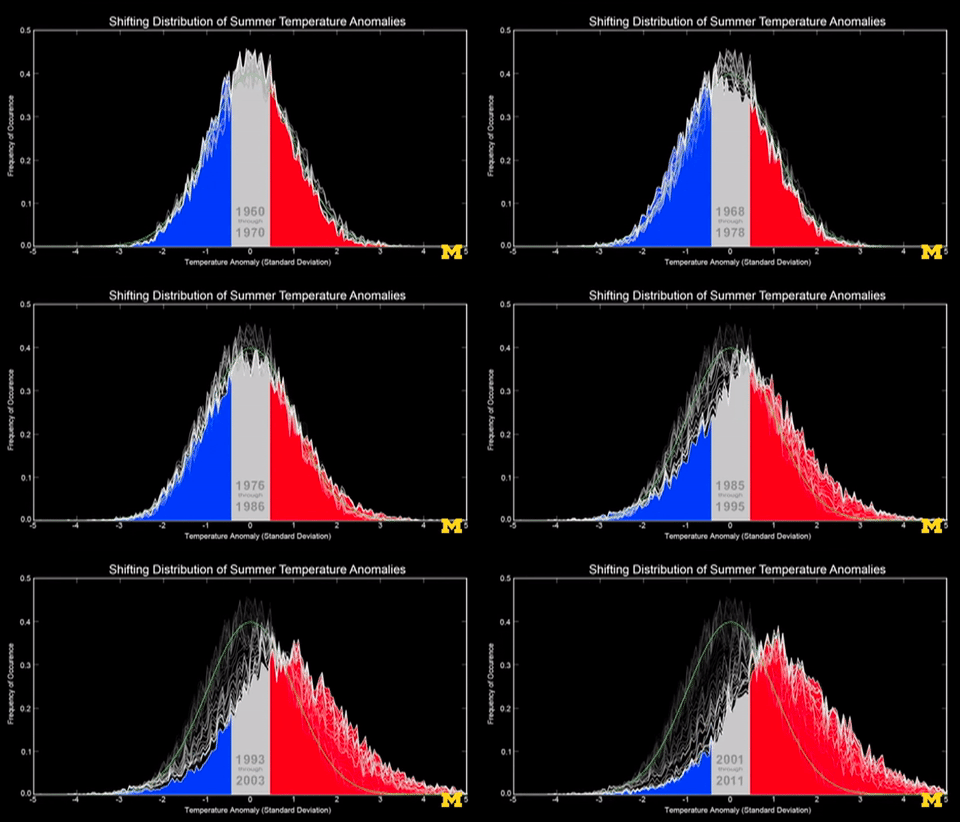
Dr. Arun Majumdar’s presentation, Michigan State University

This is a bell curve mapping distribution of temperature anomalies over 60 years. To the left are temperatures colder than average and to the right are temperatures hotter than average. The mean is shifting and the distribution is broadening rightwards. The right tail of the distribution is reaching 4 and 5 sigma, which are probabilities that were unheard of decades ago. The anomalies occurring at 4 and 5 sigma are (were) rare massive heatwaves, storms, and floods, which are becoming more common then ever.

“Okay, but I still went skiing this winter…”


The weather and the climate are two different things. The difference between weather and climate is a measure of time. Weather is what conditions of the atmosphere are over a short period of time, and climate is how the atmosphere “behaves” over relatively long periods of time. We talk about climate change in terms of years, decades, and centuries. The weather is forecast 5 0r 10 days ahead, but the climate is studied across long periods of time to look for trends or cycles of variability, such as the changes in wind patterns, ocean surface temperatures, and precipitation. Snow in skiing locations isn’t proof that climate change is not happening.

The warming is due to natural variation…


This is a very common argument, the denier does not argue against the existence of climate change, generously admitting the climate has *always* changed, but they do not believe that humans are responsible for it.

The IPCC has concluded that the warming of the last century, especially from the 1970s, falls outside the bounds of natural variability.

carbon-budget-exhibits_3-e1488189073538.png
Variation of Co2 in atmosphere, from 800000BC to today, NOAA NCDC

Let’s walk down memory lane and look at what the IPCC has been saying to us for 26 years. And keep in mind that the IPCC reports are the most comprehensive, global, and peer-reviewed studies on climate change ever written by anyone, bringing together the work of over 800 scientists, more than 450 lead authors from more than 130 countries, and more than 2,500 expert reviewers. In short, the IPCC reports are humanity’s best attempt to date at getting the science right.

Over the last 800,000 years, Earth’s climate has been cooler than today on average, with a natural cycle between ice ages and warmer interglacial periods. Over the last 10,000 years (since the end of the last ice age) we have lived in a relatively warm period with stable CO2 concentration. Humanity has flourished during this period. Some regional changes have occurred – long-term droughts have taken place in Africa and North America, and the Asian monsoon has changed frequency and intensity – but these have not been part of a consistent global pattern.

The rate of CO2 accumulation due to our emissions in the last 200 years looks very unusual in this context (see chart above). Atmospheric concentrations are now well outside the 800,000-year natural cycle and temperatures would be expected to rise as a result.

Moreover, the IPCC in 1995, in its second assessment report included a sentence that hit the headlines worldwide:

“The balance of evidence suggests a discernible human influence on global climate”

By 2001, IPPC’s third report was even clearer:

“There is an new and stronger evidence that most of the warming observed over the last 50 years is attributable to human activities.”

By 2007, in it’s fourth report, IPCC spoke more strongly still:

“Human induced warming of the climate system is widespread”

In 2013, in the 5th Assessment Report, they stated,

“It is extremely likely that human influence on climate caused more than half of the observed increase in global average surface temperature from 1951 to 2010”

Human activity has led to atmospheric concentrations of carbon dioxide, methane and nitrous oxide that are unprecedented in at least the last 800,000 years.

There is, therefore, a clear distinction to be made between what is “natural variability” and what is our contribution.

“The amount of warming is insignificant…


screen-shot-2017-01-18-at-12-28-35-pm

The European Geosciences Union published a study in April 2016 that examined the impact of a 1.5°C vs. a 2.0°C (bear in mind we are at 0.8°C now, without the slightest chance of slowing down) temperature increase by the end of the century. It found that the jump from 1.5 – 2°C, a third more of an increase, raises the impact by about that same fraction, on most of the natural phenomena the study covered. Heat waves would last around a third longer, rain storms would be about a third more intense, the increase in sea level would be that much higher and the percentage of tropical coral reefs at risk of severe degradation would be roughly that much greater.

But in other cases, that extra increase in temperature makes things ever more dire. At 1.5°C, the study found that tropical coral reefs stand a chance of adapting and reversing a portion of their die-off in the last half of the century. But at 2°C, the chance of recovery disappears. Tropical corals are virtually wiped out by the turn of the century.

With a 1.5°C rise in temperature, the Mediterranean area is forecast to have about 9% less fresh water available. At 2°C, that water deficit nearly doubles. So does the decrease in wheat and maize harvest in the tropics.

Bottom line: It may look small but it’s a huge deal.

“The benefits will outweigh the problems”


When people talk of alleged benefits of climate change, they are usually talking about agriculture. The argument says that the increased concentrations of CO2 will give a boost to crop harvests leading to larger yields.

This is laughable

Climate change will slow the global yield growth because high temperatures result in shorter growing seasons. Shifting rainfall patterns can also reduce crop yields. Climate trends are already believed to be diminishing global yields of maize and wheat. These symptoms will only worsen as temperatures and extreme weather events become more common. If climate change is allowed to reach a point where the biophysical threshold is exceeded, as would be the case on current emission trajectories, then crop failure will become normal. Also, the severest risks are faced by countries with high existing poverty and dependence on agriculture for livelihoods. Even at “low” levels of warming, vulnerable areas will suffer serious impacts.

  • Sub-Saharan Africa, according to the World Economic Forum, at 1.5°C warming by 2030 would bring about a 40% loss in maize cropping areas;
  • South East Asia, in a 2°C would experience unprecedented heat extremes in 60%-70% of their areas.

Agricultural productivity is at risk, not only in developing countries but also in breadbasket regions such as North and South America, the Black Sea and Australia.

Moreover, in October 2015, a study published in Nature estimated that the world could see a 23% drop in global economic output by 2100 due to a changing climate, compared to a world in which climate change is not taking place. The coauthor of the study had this to say,

“Historically, people have considered a 20% decline in global GDP to be a black swan: a low-probability catastrophe – Instead, we’re finding it’s more like the middle-of-the-road forecast.”

Technology will come to the rescue…”

Deniers who make this case seemingly acknowledge climate change, yet they are optimistic believers in technology being the be-all end-all and that geo-engineering will save us from the clutches of global warming.  There are two things I find problematic about this approach:

  1. I think this argument is akin to the “We almost discovered nuclear fusion- we’re only 20 years away!” argument, which stipulates that the nuclear fusion is at any given point in time 20 years away. It takes into account that we have not developed the appropriate technologies to “save” us from climate change, and when we do, there is still a maddening lag between the innovation and deployment. Not to mention the fact we still have not identified which technologies can do the greatest good in the shortest time so we cannot fly blindly in a vague hope that tech will rescue us;
  2. Such an approach fights the “symptoms” of climate change, not the cause of it, meaning that it entrenches our extremely wasteful and inefficient ways that have brought on climate change in the first place.

None of this is to say that I do not believe that technology will play a pivotal role in our transition, of course, it will! But we cannot afford to rely entirely on waiting for carbon capture and storage and the likes to become a deployable and scalable economic reality.

“We shouldn’t wreck the economy to fix the problem when it’s still uncertain!”

6930c533b5f4fb2d43c4c27d18de62d1

When you really get down do it, people will just tell you what their ultimate bottom-line is. If we don’t know with absolute confidence how much you warmer and what the local and regional impact will be perhaps we’d better not committing ourselves to costly reductions in greenhouse gas emissions.

I have written a post on the employment benefits tied to jobs in the renewable energy sector, and there are a plethora of studies pointing to the huge costs of climate change inaction, amongst these, a new study by scholars from the LSE, published last year in Nature Climate Change, offers a daunting scenario.

They estimate that a business-as-usual emissions path would lead to expected warming of 2.5 degrees C by 2100. Under that scenario, banks, pension funds, and investors could sacrifice up to $2.5 trillion in value of stocks, bonds, and other financial assets. The worst-case scenario, with a 1% chance of occurring, would put $24 trillion (about 17 % of global financial assets) at risk.  This is but one of the scenarios that have been studied, that point to the huge costs of inaction.

Climate change can affect the economy in myriad ways; including the extent to which people can perform their jobs, how productive they are at work, and the effects of shifting temperatures and precipitation patterns on things like agricultural yields or manufacturing processes. These factors help determine our “economic output” — all the goods and services produced by an economy.

In spite of the fact that there is disagreement on how much exactly economies will be affected, we know the cost of inaction will be immense. With the information at our disposal, it would be foolish and dangerous to assume that reducing emissions will cost more than coping with a changing climate.

Good luck with your “debate” and let me know how it goes.